
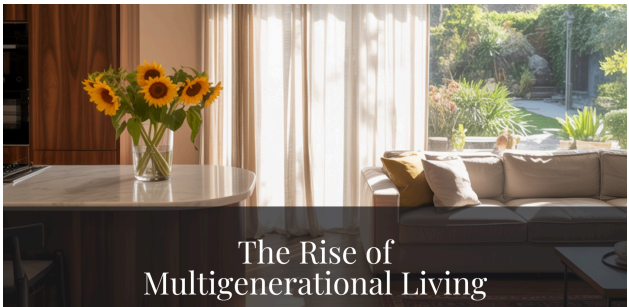
The Rise of Multigenerational Living

In today’s housing market, more and more families are choosing to live under one
roof—and it’s not just a passing trend. Multigenerational living is a thoughtful decision
rooted in connection, care, and practicality.
From aging parents moving in, to grown kids staying longer, or even combining
households to navigate rising housing costs, multigenerational homes are helping
families stay closer while managing life’s transitions with flexibility and support.
Why It’s Working for So Many Families:
Shared Expenses – Combining households can ease the financial burden for
everyone, from mortgage payments to utilities and groceries.
Built-In Support – Whether it’s helping with childcare, elder care, or simply having
extra hands around the house, multigenerational living can make day-to-day life easier.
Flexible Spaces – Today’s homes offer creative solutions: dual primary suites, finished
basements, converted garages, or ADUs (accessory dwelling units) that give each
generation a sense of independence within the same property.
But It’s Not for Everyone
Multigenerational living has its benefits—but it also comes with its own set of
considerations. Privacy, personal space, household dynamics, and long-term goals all
matter. The right home makes all the difference.
Looking for the Right Fit?
If you’re thinking about a home that fits your whole family—now or in the future—it starts
with smart planning. From layout to location to the long-term vision, the right strategy
makes it work for everyone under one roof.
Let’s explore options that meet your needs now and make room for what’s next. I’d love
to help you find a space that supports your next chapter—together.
roof—and it’s not just a passing trend. Multigenerational living is a thoughtful decision
rooted in connection, care, and practicality.
From aging parents moving in, to grown kids staying longer, or even combining
households to navigate rising housing costs, multigenerational homes are helping
families stay closer while managing life’s transitions with flexibility and support.
Why It’s Working for So Many Families:
Shared Expenses – Combining households can ease the financial burden for
everyone, from mortgage payments to utilities and groceries.
Built-In Support – Whether it’s helping with childcare, elder care, or simply having
extra hands around the house, multigenerational living can make day-to-day life easier.
Flexible Spaces – Today’s homes offer creative solutions: dual primary suites, finished
basements, converted garages, or ADUs (accessory dwelling units) that give each
generation a sense of independence within the same property.
But It’s Not for Everyone
Multigenerational living has its benefits—but it also comes with its own set of
considerations. Privacy, personal space, household dynamics, and long-term goals all
matter. The right home makes all the difference.
Looking for the Right Fit?
If you’re thinking about a home that fits your whole family—now or in the future—it starts
with smart planning. From layout to location to the long-term vision, the right strategy
makes it work for everyone under one roof.
Let’s explore options that meet your needs now and make room for what’s next. I’d love
to help you find a space that supports your next chapter—together.
Categories
- All Blogs (78)
- Dunning Area of Chicago Market Updates (3)
- Edison Park Market Updates (2)
- Elmwood Park Market Updates (5)
- Forest Glen Chicago Market Updates (2)
- Harwood Heights Market Updates (1)
- Jefferson Park Market Updates (2)
- Keeping Sellers and Buyer Informed (28)
- Norridge Market Updates (2)
- Norwood Park Market Update (1)
- Park Ridge Market Updates (2)
- Portage Park Market Update (2)
- Tips For Buyer (5)
- Tips For Sellers (22)
Recent Posts
Elmwood Park Housing Market Update: What Home Sellers Need to Know in May 2026

Norwood Park Market Trends

Norridge Market Trends

Montclare Chicago Market Trends

Park Ridge Market Trends

Forest Glen Market Trends

Portage Park Market Trends

Jefferson Park Market Trends

Edison Park in Chicago Market Trends

Dunning Area Market Trends